Cat Hop - Dancing Music Games
- 4.7
- Rating
- 1.00M
- Installs
- Free
- Price

 Analysis by App-foxy
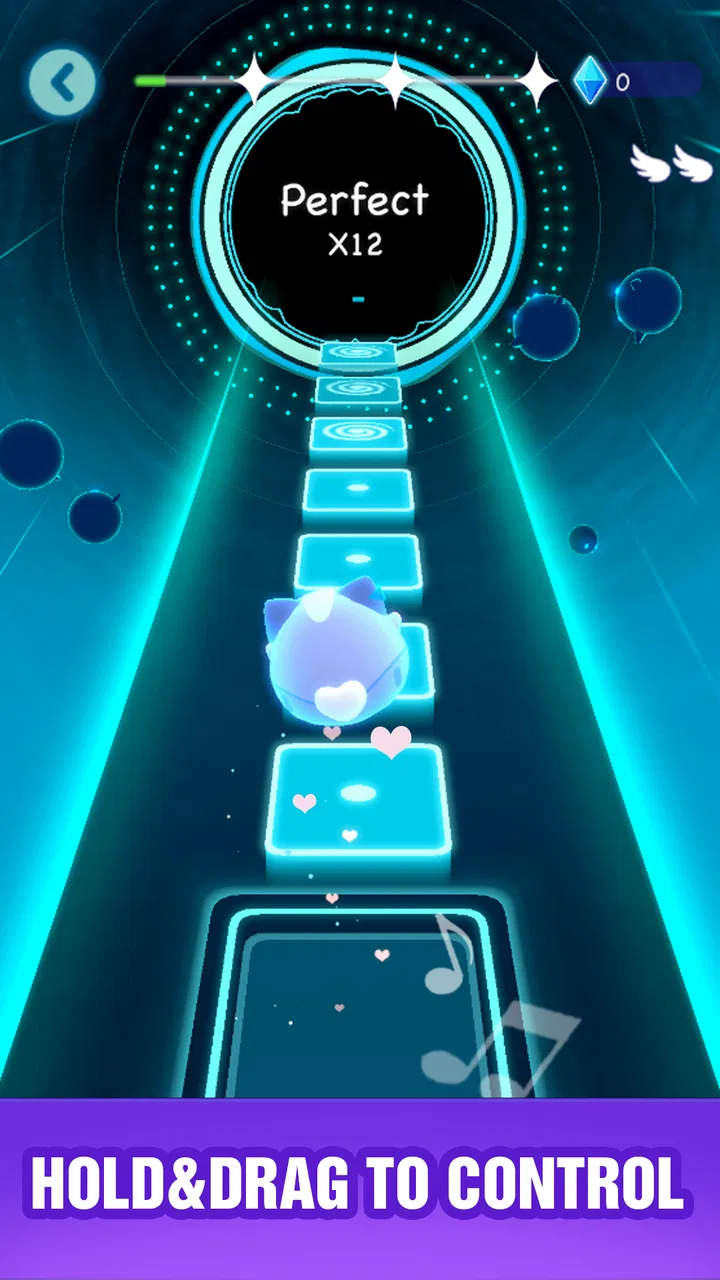
I spent time with Cat Hop as a light music game built around a simple idea: guide an adorable cat through piano-style play while keeping your actions in rhythm. It is colorful, immediately understandable, and much less intimidating than a traditional rhythm game. I could start playing without studying a long tutorial, which is exactly what I want when I have only a few spare minutes.
That simplicity is also the key to judging it fairly. This is not trying to replace a full music-training app, a deep arcade game, or a large collection of competitive rhythm challenges. It is a casual experience from Cobby Labs that uses cats, movement, and musical timing to make short sessions feel cheerful. The game is free, rated for Everyone, and belongs to the music-games category, so its appeal is broad rather than aimed at a specialist audience.
How the first few sessions establish a reason to keep playing
The early goal is easy to understand: stay with the musical flow and help the cat move or dance through the sequence. That clarity matters because the game does not need to spend much time explaining its basic appeal. I could focus on the beat, watch the character react, and quickly see whether my timing was improving.
You May Also Like

 Blood Strike: 2.5 Anniversary
Blood Strike’s Loadouts Turn Every Drop Into a Tactical Gamble
A close look at Blood Strike’s custom loadouts: how fast access to signature weapons reshapes its battle royale rhythm, rewards preparation, and narrows the gap between fights.

 Pandora - Music & Podcasts
Pandora’s Music Is Easy to Start, but Harder to Recover
Pandora’s strength is its low-effort path from a seed to a station. Its weak spot is how much confidence it asks you to place in connection, setup, and quiet recovery.

 8 Ball Pool
 Is Built on Rivalries, Rematches, and Routine
A close look at the rivalries, rematches, shared routines, and unanswered safety questions that turn a quick pool match into a persistent mobile community.

 Samsung Music
’s Quiet Strength Is Playing What You Already Own
Its reach comes less from spectacle than from dependable access to a personal library. That simplicity is both the app’s strongest retention engine and its ceiling.

 AccuWeather: Weather Radar
AccuWeather Review: A Quick, Clear Forecast for Everyday Decisions
For everyday plans, the best forecast is the one you can understand quickly. AccuWeather makes rain timing, radar, and local conditions easy to act on, with a few trade-offs.

 Hill Climb Racing
Why Hill Climb Racing Still Turns Crashes Into One More Run
A tiny car, a bumpy hill and one more upgrade: Hill Climb Racing keeps resurfacing because its simple chaos makes every near-miss feel personal.
More From Our News Desk
View All News


For a child, the cat theme provides an inviting reason to try another round. For an adult, it works more like a small reset between tasks. I found that the visual presentation makes the first attempts feel forgiving, even when my timing was not perfect. The game asks for attention, but not the kind of concentration demanded by a serious rhythm challenge.
The first useful milestone is not a complicated achievement screen; it is the moment when the controls begin to feel connected to the music. At the beginning, I was watching the moving elements more than listening. After a few attempts, I started anticipating the next input instead of reacting late. That shift gives the game its most satisfying early payoff.
A realistic use case is a short break while waiting for an appointment or commuting with a stable connection and a few minutes to spare. I would not choose it for a long uninterrupted evening if I wanted a large story or a complex strategic system. I would choose it when I wanted something cheerful that could be understood instantly and put down without losing a complicated train of thought.
The cat presentation also softens failure. Missing a rhythm cue feels less severe when the whole game is framed as playful dancing rather than as a strict musical exam. That makes it suitable for younger players and for people who usually avoid rhythm games because they expect them to be punishing from the first screen.
What progress feels like during ordinary play
The most useful progress signal is personal control. I noticed improvement when I stopped tapping at the last possible moment and began following the pattern with a steadier rhythm. In a game this compact, that kind of improvement can be more meaningful than a large collection of menus or badges. It gives me a reason to replay a sequence even when I already know what is coming.
The visual movement helps communicate whether a run is going well. The cat is not merely decoration; it gives the musical action a physical shape. When the timing works, the character’s movement makes the result feel more immediate than a row of abstract notes would. When it does not work, I can usually tell that my problem is timing rather than a confusing control scheme.
One practical tip is to listen first and watch second. New players may naturally stare at the cat or the brightest part of the screen, but the musical pulse is a better guide once the sequence becomes familiar. I also recommend beginning with short, deliberate sessions instead of repeatedly rushing after a mistake. Rhythm games often reward a calm reset, and this one is more approachable when I treat each attempt as practice rather than as a test of reflexes.
Another small advantage is that the game can serve different moods. I can play actively, trying to improve my timing, or casually, enjoying the cat and the music without chasing a perfect performance. That flexibility is valuable because not every session needs the same level of focus. Still, players who need detailed performance reports, musical notation, or a clear training curriculum should look toward a dedicated rhythm-learning app instead.
The game’s public reception suggests that this accessible approach is connecting with many players: it has a 4.7 average from around 11 thousand ratings. I would treat that as evidence of broad appeal rather than proof that every rhythm-game fan will find enough depth here. The experience is strongest when judged as a friendly, quick-play music game.
Where the challenge begins to matter
The challenge comes from maintaining timing while the screen keeps moving and the musical pattern demands attention. That creates a gentle difficulty curve: the basic action is simple, but consistency becomes harder than understanding. I like that distinction because it lets a beginner participate immediately while leaving room for improvement through repetition.
My main caution is that a simple control idea can eventually expose the limits of a simple game. Once I understood the central rhythm, the question became whether the variety of situations would continue to surprise me. Players who enjoy mastering a focused mechanic may be happy to chase cleaner runs. Players who need frequent rule changes, elaborate objectives, or a strong narrative may feel the pace flatten sooner.
This is also where the game differs from the usual alternatives. Compared with a music-learning tool, it prioritizes mood and instant play over teaching technique. Compared with a large rhythm arcade title, it feels less demanding and more welcoming. Compared with an endless casual game, its musical timing gives each attempt a clearer structure. Those are useful trade-offs, not shortcomings by themselves, but they determine who will enjoy it most.
I would not recommend treating it as a substitute for an instrument practice routine. It may help a player become more aware of pulses and repeated timing, but its purpose is entertainment. Likewise, someone looking for online competition, deep customization, or a long-form campaign should choose a game designed around those goals. Cat Hop is better for approachable rhythm play than for a feature-heavy progression journey.
Unlocks, momentum, and the pressure to continue
The game’s retention comes mainly from the desire to do a little better and see the cat continue through its musical activity. That is a healthy kind of short-term motivation when I am choosing to replay because I nearly held the rhythm rather than because the game is demanding a long daily commitment.
At the same time, the pacing may feel modest for players who expect a constant stream of major unlocks. A cute theme can bring someone through the first sessions, but lasting interest depends on whether the player enjoys repeating patterns and refining timing. I would describe the retention pressure as gentle: the game invites another attempt, but its appeal is not based on a large strategic layer.
My advice is to set a small personal target before playing. For example, I might focus on staying accurate through one section, then stop after a successful run instead of automatically continuing. This makes the game work well as a break rather than allowing a quick session to become aimless repetition. It also reveals whether the core rhythm is enough for me without relying on imagined future features.
Parents may appreciate the Everyone content rating and the non-threatening presentation, but I would still let a child try the controls personally. A young player who loves cats and music will probably understand the attraction quickly. A child who wants open exploration, a story, or a collection game may lose interest because the central activity remains focused on rhythm and movement.
The same distinction applies to older players. I can recommend it to someone who wants a friendly introduction to music games, especially if intimidating interfaces have kept them away from the genre. I would hesitate to recommend it to an experienced rhythm-game player unless that person specifically wants something lighter between more demanding titles.
Technical fit and the practical choice to download
Cat Hop is free, which removes the biggest barrier to trying it. It runs on Android versions from 6.0 onward, and the current version is 0.2.4. Those details make it accessible to people who are not using a recent flagship phone, although the actual comfort of play will still depend on the device’s screen, sound, and responsiveness.
Because timing is central, audio setup matters more here than it would in a purely visual casual game. I found it easier to follow the beat when I was in a quiet place and could hear the music clearly. If the phone’s sound is distorted or the environment is noisy, the game may feel harder than it really is. Headphones can help with concentration, but I would avoid assuming that every pair will produce identical timing or comfort.
The game has passed one million installs, so it is not an obscure experiment with no visible audience. It was released on October 10, 2024, and the version number shows that the product is still relatively early in its life. I see that as a reason to judge the current experience on its own terms rather than expecting the breadth of a mature, long-running rhythm franchise.
One useful workflow is to play the first attempts with notifications silenced. A rhythm game loses some of its charm when a message pulls my eyes away at the exact moment I need to follow the pattern. I also prefer testing it in both portrait and landscape only if the game presents those options naturally; forcing a position or changing the phone repeatedly can create more friction than the short session is worth.
The developer, Cobby Labs, has chosen an immediately recognizable identity instead of a realistic musical setting. That is a smart fit for casual play, but it also means the visual charm carries a meaningful part of the experience. If the cat theme does not appeal to you, the remaining reason to stay is the rhythm itself, and that may not be enough for everyone.
My verdict on the progression and the right audience
I think the progression works best as a loop of recognition, correction, and replay. I notice a musical pattern, miss or catch it, then try again with a better sense of timing. That loop is easy to enter and satisfying in short bursts. It does not need a complicated goal system to make the first sessions worthwhile.
Its weakness is the same thing that makes it approachable: the focused design may not provide enough long-term variation for players who measure value by extensive unlock trees, complex challenges, or a campaign with major turning points. I would skip it if my priority were deep progression. I would also skip it if I wanted a serious tool for learning piano, because the game’s friendly rhythm play should not be confused with structured instruction.
I would recommend it to families seeking an accessible music game, casual players who enjoy cute characters, and anyone who wants a low-pressure way to practice listening for a beat. I would especially suggest giving it a fair trial during several short sessions rather than deciding after one rushed attempt. The satisfaction grows when the player begins to anticipate the rhythm instead of merely reacting to the screen.
For me, the strongest quality is its ability to turn a basic timing exercise into something warm and easy to approach. The best reason to keep playing is the feeling of becoming more consistent, not the promise of a deep progression system. That makes the game pleasant company for brief breaks, while also setting a clear limit on its appeal.
Overall, I see Cat Hop as a charming free music game with a clear audience and a sensible pace. It delivers an inviting introduction to rhythm play, uses its cat theme effectively, and gives beginners room to improve without making every mistake feel serious. I would recommend it when you want a quick, cheerful game that can be picked up immediately. I would look elsewhere for competitive depth, advanced musical training, or a substantial adventure. For the right player, though, its modest goals are exactly what make it easy to return to.
FAQs for Cat Hop - Dancing Music Games
01What is the main objective of Cat Hop - Dancing Music Games?
Cat Hop - Dancing Music Games is a rhythm-based game where players control a cute cat character as it hops across tiles to the beat of various music tracks. The main objective is to keep the cat moving in time with the music, achieving high scores by hitting tiles accurately and maintaining combos.
02Is Cat Hop - Dancing Music Games free to play?
Yes, Cat Hop - Dancing Music Games is free to download and play. However, the game offers in-app purchases that allow players to unlock additional music tracks, themes, and other premium features to enhance their gaming experience. These purchases are optional and not necessary to enjoy the game.
03What are the device requirements for Cat Hop - Dancing Music Games?
Cat Hop - Dancing Music Games requires Android 5.0 or iOS 9.0 and above. It is optimized for both smartphones and tablets, providing smooth performance across most modern devices. Ensure you have sufficient storage space available for the app and any additional content downloads.
04Does Cat Hop - Dancing Music Games offer offline play?
Cat Hop - Dancing Music Games can be played offline, allowing players to enjoy the rhythm action without an internet connection. However, certain features like leaderboard access and downloading new music tracks require an internet connection. Playing offline may limit some interactive functionalities.
05How does the game handle updates and new content?
The developers of Cat Hop - Dancing Music Games regularly update the app to introduce new music tracks, features, and improvements. Users are encouraged to keep the app updated to enjoy the latest content and enhancements. Updates are typically available through the respective app stores.
Pros
- Engaging rhythm-based gameplay.
- Wide variety of popular music tracks.
- Simple controls
- easy to learn.
- Visually appealing graphics.
- Regular updates with new songs.
Cons
- In-app purchases can be pricey.
- Occasional lag in older devices.
- Limited offline play options.
- Ads can be frequent and disruptive.
- Requires constant internet connection.

Cat Hop - Dancing Music Games
Gallery